

Fishing in Espíritu Santo Bay
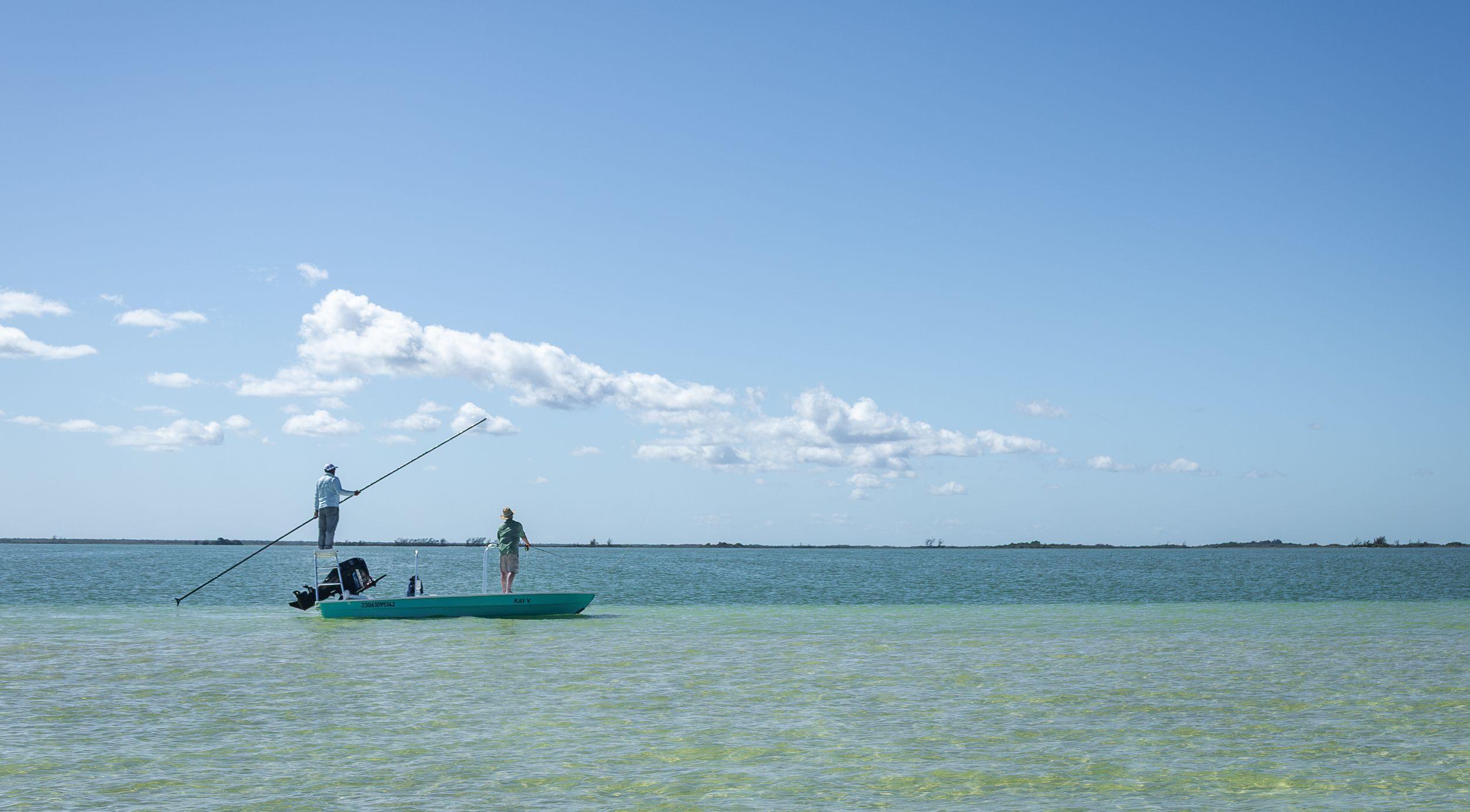
Beh Kay Lodge was built around the pursuit of permit. Set on the shores of Espíritu Santo Bay, the lodge gives anglers access to one of Mexico’s most complete and varied permit fisheries, where changing light, wind, tides, and water movement shape each day on the flats.
This is not a one-dimensional fishery. Across the bay, anglers may encounter permit tailing in skinny water, singles cruising over white sand, large schools moving across turtle grass, fish feeding close to mangroves, or small groups sliding through deeper lagoons and natural channels. Each area asks something different from the angler, and each day brings a new set of decisions.
The open flats of the bay offer classic sight-fishing scenarios, with clean water, long visibility, and fish moving across sand and grass. The outer coastlines, both north along the mainland and around Isla Chal, bring a different rhythm, where conditions can shift quickly and fish often behave in less predictable ways.
Inside the interior lagoons and the narrow natural channels that connect the system, the fishing becomes more technical. Large schools are less common here. Instead, anglers often focus on singles, doubles, or very small groups of fish, usually in shallower, quieter water where accuracy, timing, and presentation matter most.
Target species of the bay
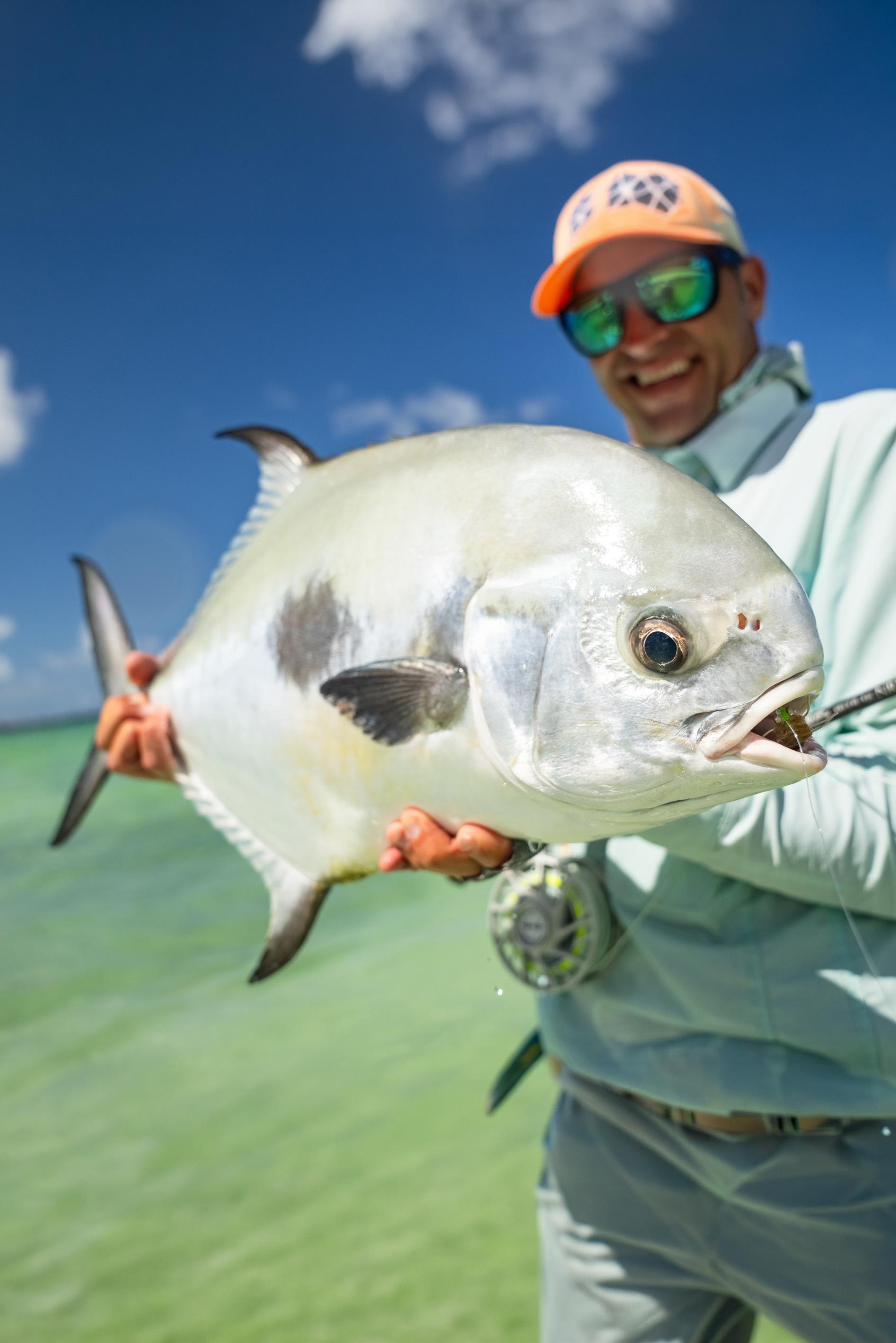
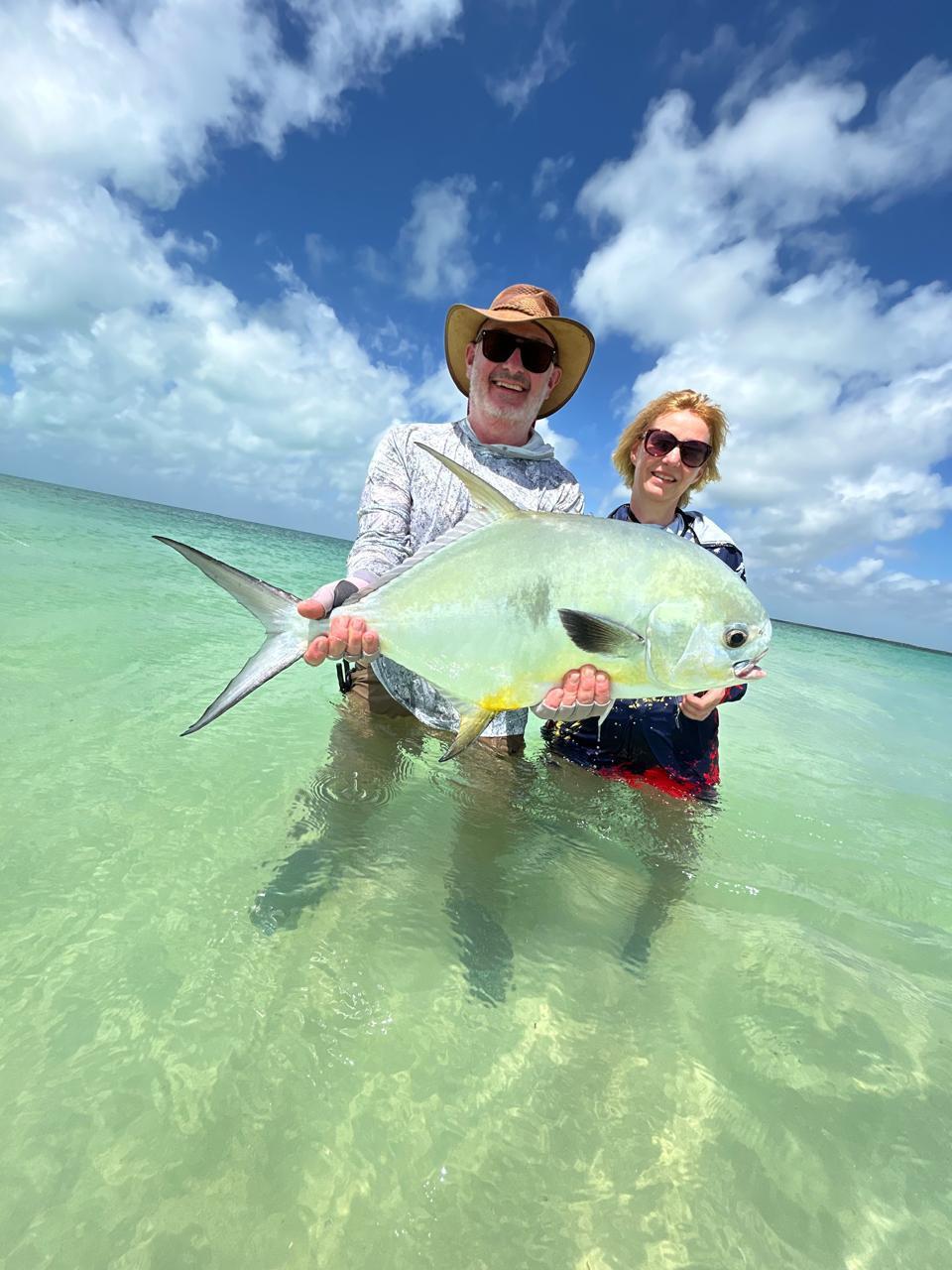
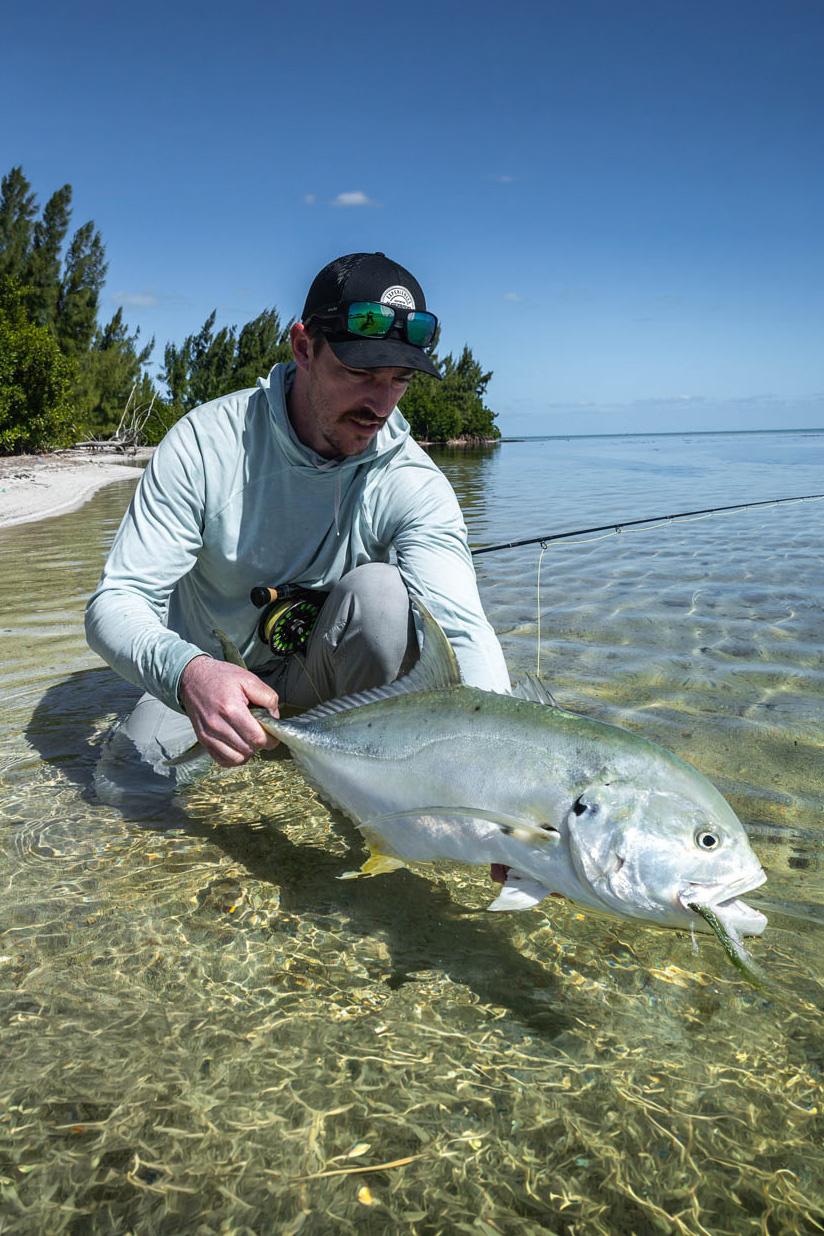
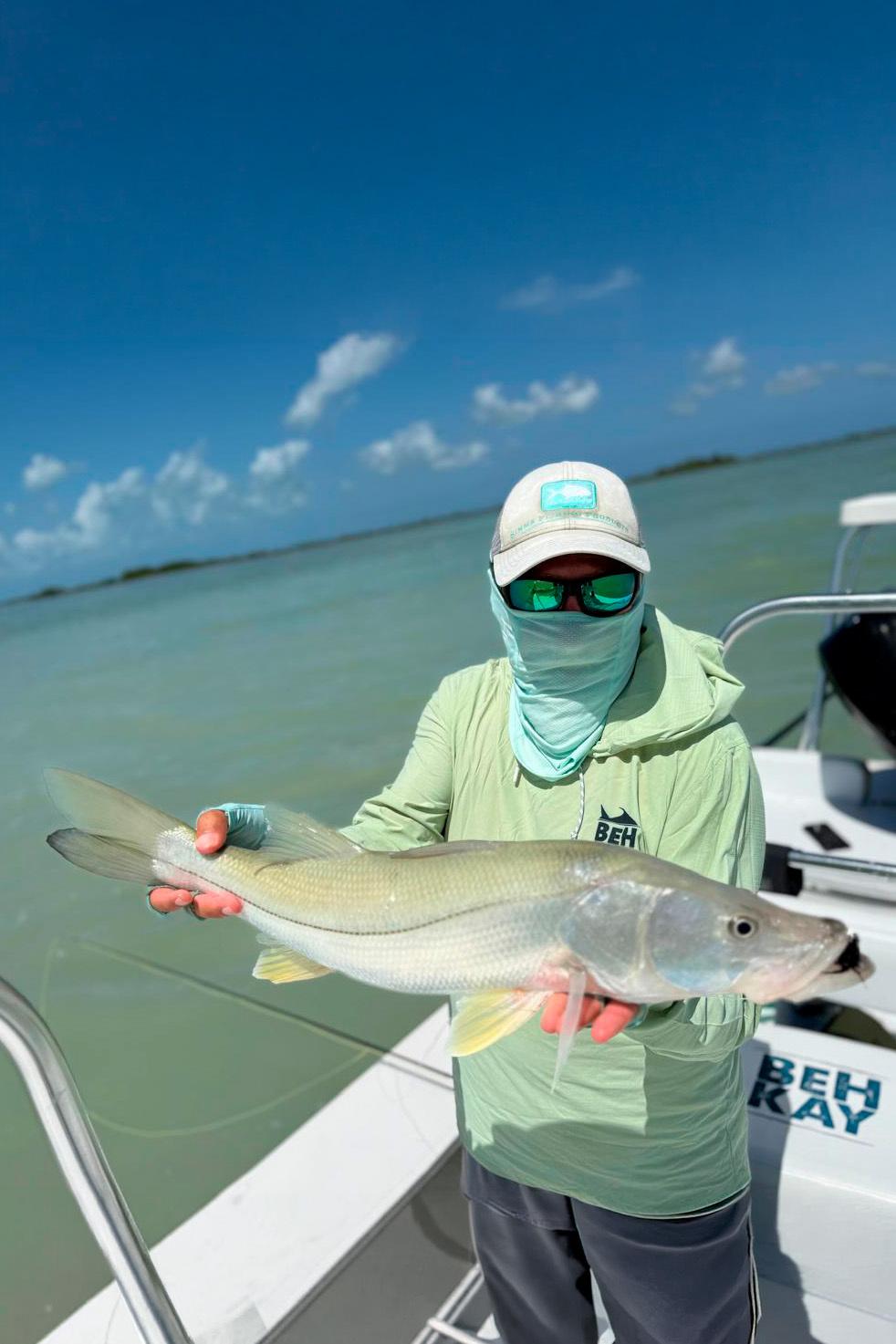
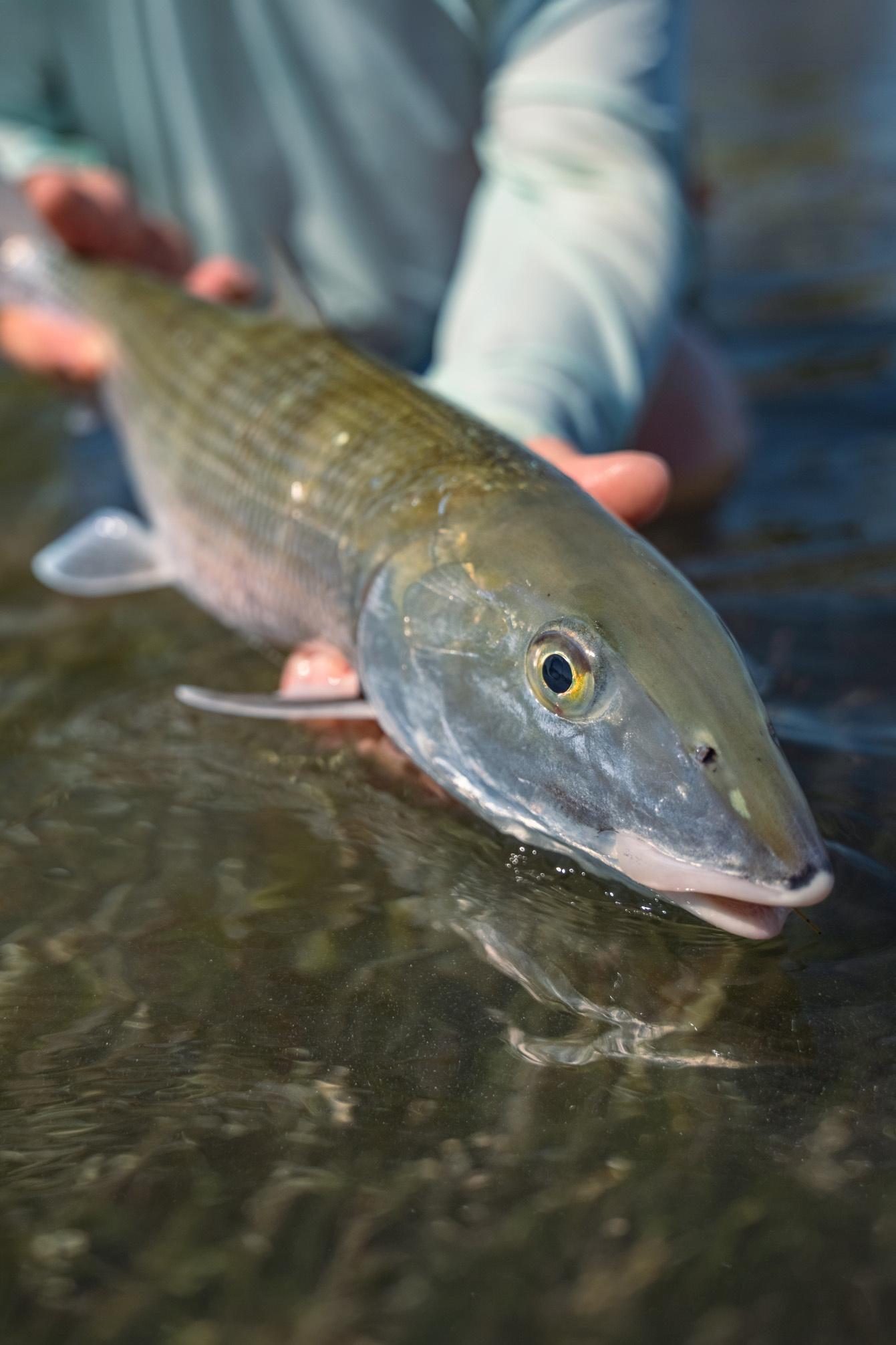
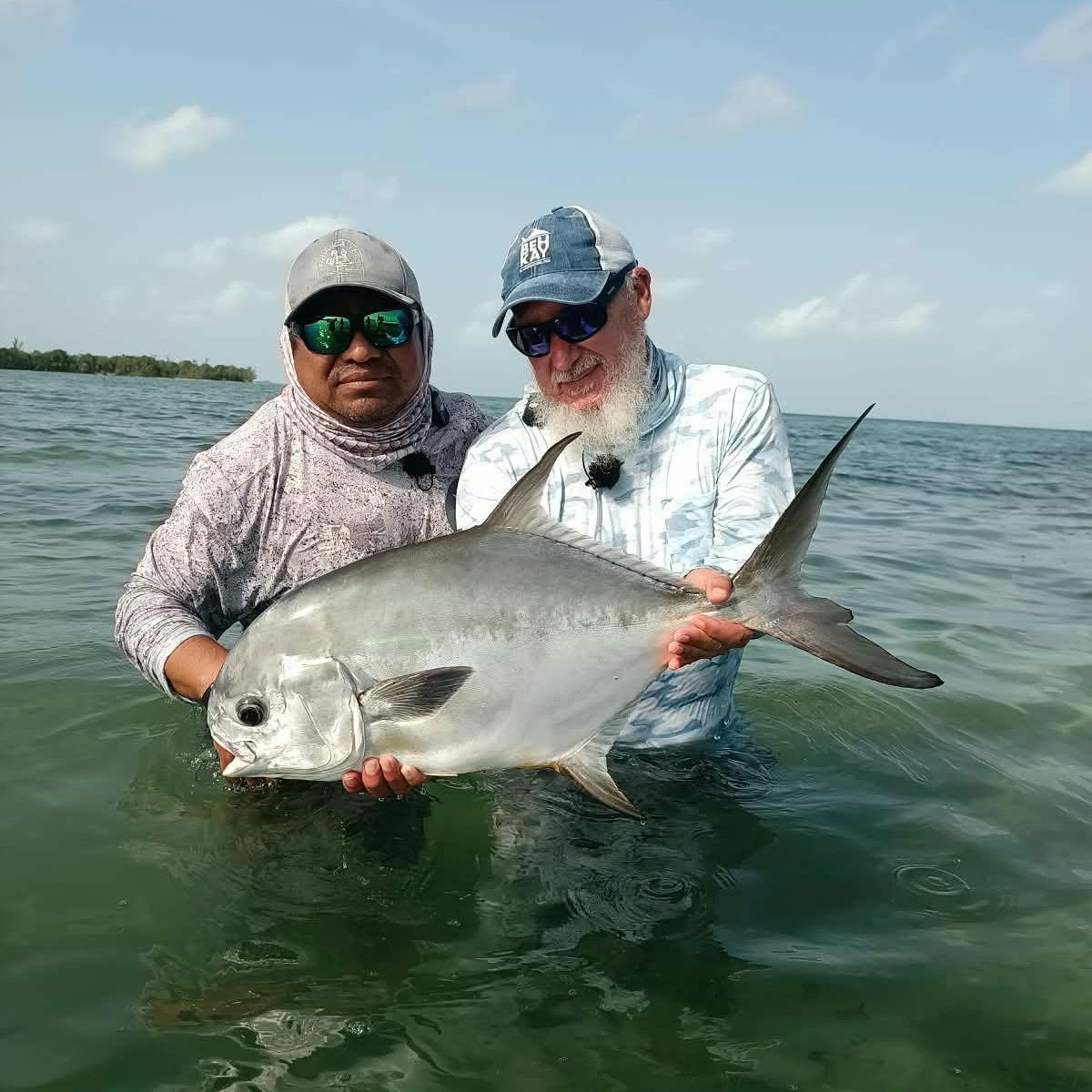
Permit are the defining species at Beh Kay and the reason behind the lodge’s identity as The House of Permit. Everything in the program is organized around creating quality shots at these fish, from the guide rotation and daily planning to the areas selected according to conditions.
Some days are built around covering water and looking for moving fish. Others are slower and more technical, waiting for the right fish to appear in the right light. Anglers may fish from the skiff, wade shallow flats when conditions allow, or work edges, channels, lagoons, and mangroves where permit move and feed throughout the day.
One of the most unique opportunities in Espíritu Santo Bay is the growing chance to target permit on floating flies. When sargassum gathers small crabs and shrimp near the surface, permit may feed higher in the water column, creating one of the most visual and memorable moments in saltwater fly fishing. Watching a fish rise slowly toward a floating fly is a different kind of tension, and one that has become part of Beh Kay’s story.
The guide program is a key part of the experience. Beh Kay’s guides work as a team, rotate with guests throughout the week, and share information about tides, light, wind, fish movement, and productive areas. In a fishery this varied, that collaboration matters. It allows each day to be shaped around the best opportunities the bay is offering.
Although permit are the clear focus, Espíritu Santo Bay also gives Beh Kay anglers excellent opportunities for bonefish, tarpon, snook, barracuda, jacks, snapper, triggerfish, and other tropical species. These fish add variety throughout the week and often create memorable moments between permit shots.
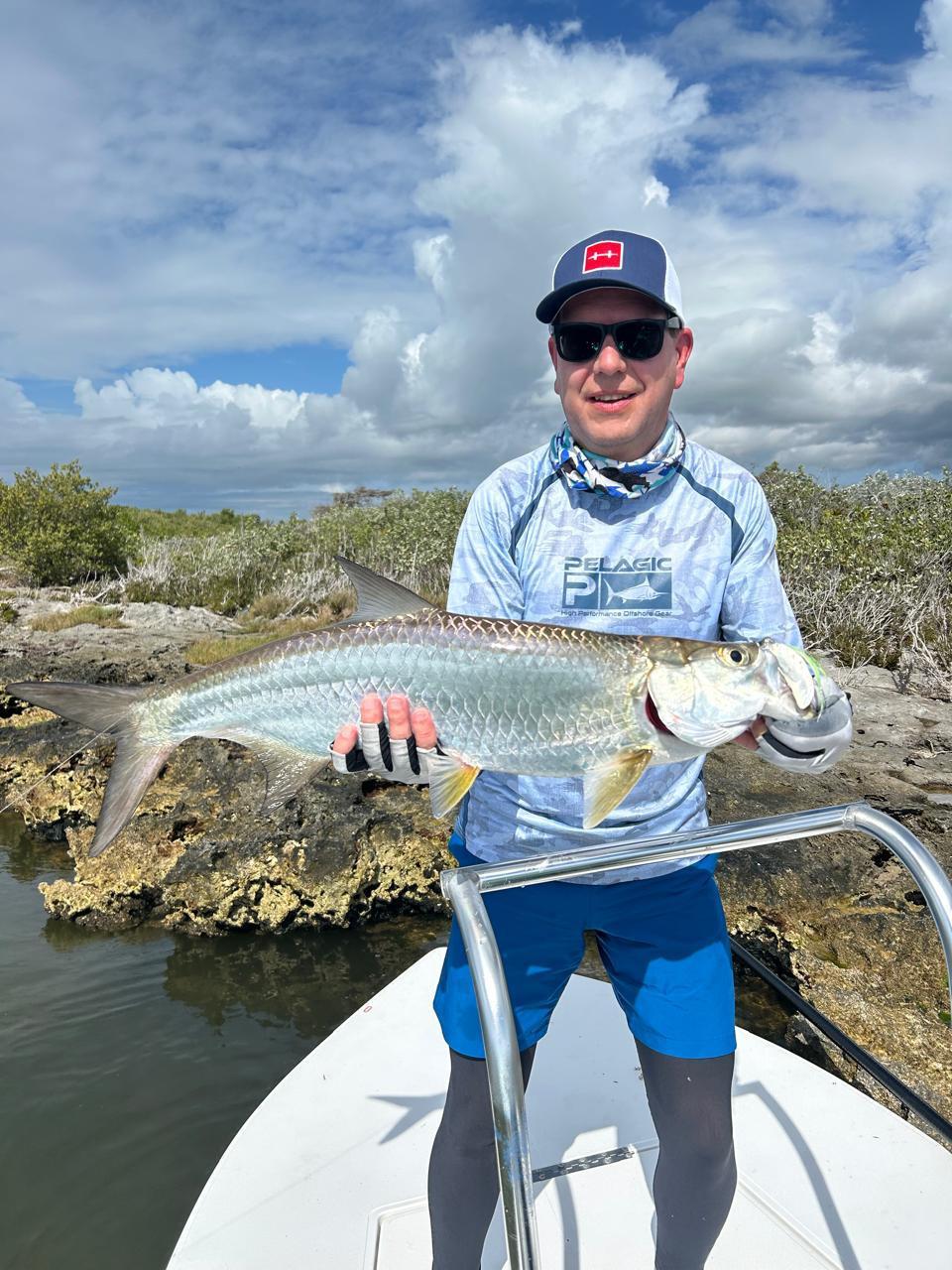
The mangrove-lined shorelines and estuaries throughout the northern bay hold healthy populations of resident tarpon ranging from 5 to 20 pounds. These fish provide exciting sightfishing opportunities with lighter tackle, particularly along mangrove edges during falling tides. Resident tarpon are commonly targeted with baitfish patterns and topwater flies, producing aggressive eats in shallow water throughout the season.
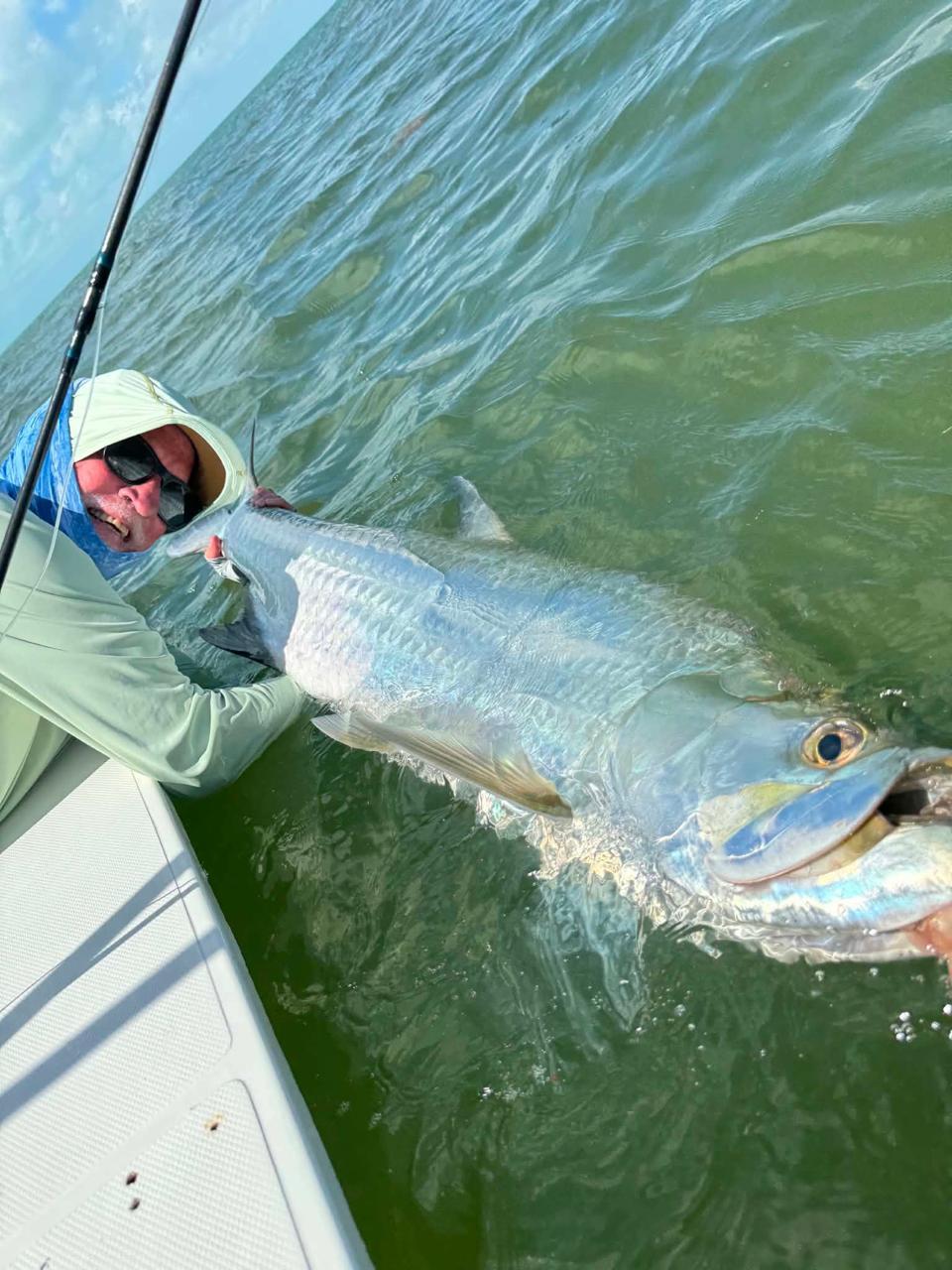
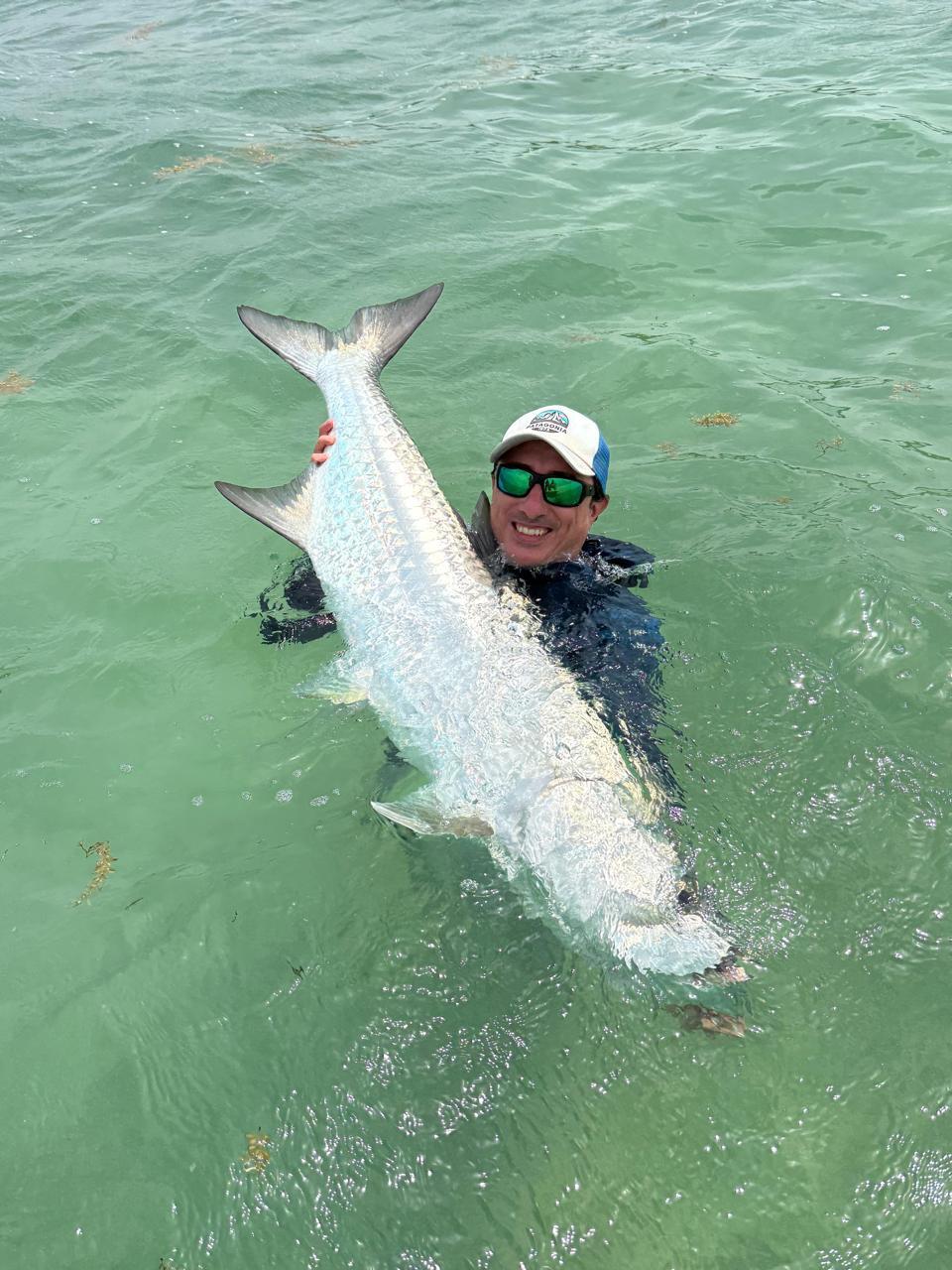
For nearly five months each year, large migratory tarpon move through Bahía Espíritu Santo following enormous schools of baitfish. These fish typically range from 80 to 150 pounds and provide true sight-casting opportunities in relatively shallow water.
Fishing is focused around deep channels and moving tides near the mouth of the bay, where tarpon stage and feed aggressively. Using 11 and 12-weight rods, anglers target rolling and cruising fish with large baitfish patterns and accurate presentations.Beh Kay offers some of the best snook fishing in the Caribbean thanks to healthy mangrove habitat and minimal fishing pressure. Snook are commonly targeted along mangrove shorelines and creek mouths where they coexist closely with resident tarpon.
During the fall months, larger migratory fish enter the system, giving anglers legitimate opportunities at trophy snook exceeding 20 pounds.
Bonefish are found across many of the bay’s shallow flats and can provide steady action when conditions are right. Large schools often gather near channels leading into the interior lagoons, while larger fish are commonly encountered alone or in small groups inside the lagoons themselves
Barracuda are among the most exciting and underrated species encountered throughout Beh Kay. These aggressive predators patrol white sand flats, river mouths, and backcountry lagoons, often appearing unexpectedly while targeting permit or bonefish.
Large jacks are also frequently encountered throughout the bay, offering blistering runs and powerful fights on fly tackle.
Daily Itinerary
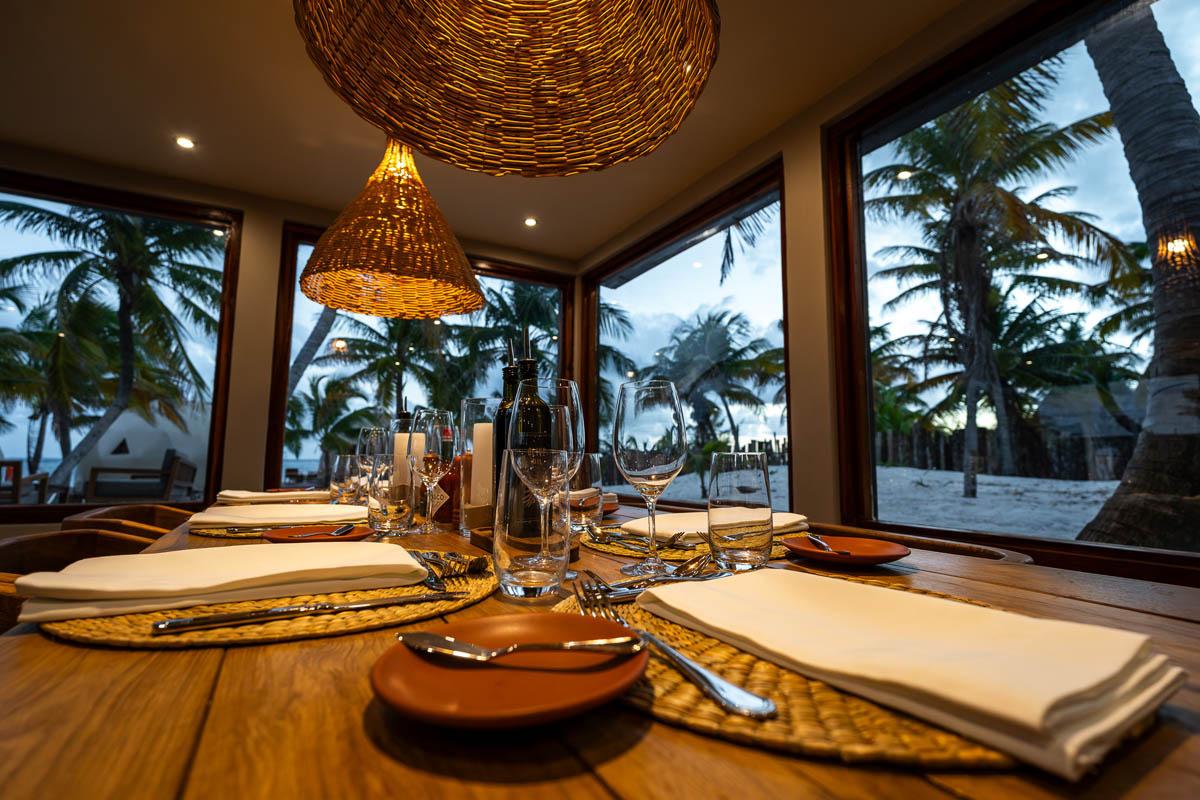
The typical trip does not include guided fishing on arrival or departure days, allowing guests time to settle into the lodge, organize tackle, and enjoy the relaxed beachfront atmosphere. Fishing days at Beh Kay are full and flexible, built around tides, weather conditions, light, and the best permit opportunities available each day.
6:00 AM - Coffee available in the main lodge
6:30 AM - Breakfast served
7:15 AM - Depart lodge for the fishing grounds
8:00 AM - Begin fishing
12:00 - 1:00 PM - Lunch taken on the water
5:00 - 5:30 PM - Return to the lodge for cocktails and appetizers
7:00 PM - Dinner served
After dinner, guests often gather in the main lodge for drinks, fly tying, and stories from the day on the flats.
Fishing Equipment
Essential Gear for the Bay
Beh Kay lodge provides anglers with high-quality loaner fly fishing equipment.
Beh Kay Lodge is proud to be recognized as a Sage Experience destination—a curated collection of the world’s finest fly-fishing lodges, selected by Sage for their exceptional fishing opportunities, personalized service, and authentic sense of place. As part of this exclusive program, Beh Kay offers guests access to high-performance Sage rods and RIO lines, perfectly matched to the technical demands of Espíritu Santo Bay’s legendary permit, tarpon, bonefish & snook fishing.
Rods
- 7 wt. 9-foot (for bonefish)
- 9wt. 9-foot (for permit): 2 rods set-ups
- 10wt. 9-foot (for baby tarpon and snook)
- 11wt. 9-foot (for migratory tarpon)
Reels/Lines
Saltwater capable reels with adjustable drags, capacity for 150 yds of 30lbs backing.
- 7wt. tropical weight-forward Bonefish line
- 9wt. tropical weight-forward Permit line – 2 different set-ups for Permit, both with floating lines rigged with different crab-patterns.
- 10wt. tropical weight-forward Tarpon line (for Baby Tarpon & Snook)
- 11wt. tropical weight-forward Tarpon line (for migratory Tarpon)
Leaders
For Permit
- Leader Recommendations: 10’ – 12-20lb Fluorocarbon (mostly 16lb)
- Tippet Recommendations: (1 Spool of Each – Fluorocarbon) – 12lb, 16lb
We recommend fishing 10-12 foot 16 pound test tapered leaders most often. There are times when you can get away with a 17-20 pound test, while sometimes you will need to downsize to 12 pound. For this reason, you should have additional leaders and tippet material on hand. We also always recommend using fluorocarbon tippet material as it is more abrasion resistant.
For Bonefish
- Leader Recommendations: 9’ or 10’ – 8.8 and 10lb
- Tippet Recommendations: (1 Spool of Each – Fluorocarbon) – 8 lb, 10 lb, 12 lb
Average Espíritu Santo Bay bonefish are not particularly large (2-3 pounds) and can be leader shy at times. Normally 9-10 foot 8 lb tapered leaders work fine. At other times you can get away with 10-12 lb leaders and tippet, so you should have these on hand. Although not mandatory, we always recommend using fluorocarbon tippet material as it is more abrasion resistant.
For Tarpon
- Straight Fluorocarbon Recommendations
- Juvenile “Baby” Tarpon: 40-50 lb Straight Fluoro
- Adults(May -September): 80lb Straight Fluorocarbon
- Class Leader Recommendations
- Juvenile “Baby” Tarpon: 16lb Class – 40-60lb Shock
- Adults (May – September) 16-22 lb Class – 80 lb Shock
For Snook
Snooks are generally not very leader shy and you should be able to present your typical baby-tarpon fly rigged with 40 or 50 lb successfully without having to change flies or leader.
For Barracudas & Sharks
Barracuda will eat long needlefish and baitfish patterns stripped very quickly. Ideally, your ‘cuda fly has a tandem or trailer hook to increase the likelihood the hook will hold. Both lemon sharks and barracuda will eat poppers as well. A 4-5 foot piece of straight monofilament with a 30” wire “bite” tippet is required. We recommend a minimum of 35-40 lb wire and our favorite brand is the knottable wire by Rio, as it is easy to knot and super strong.
Flies
For Permit
Permit’s primary food source in Espíritu Santo Bay mainly consists of small crabs and spawning or mantis shrimp. The choice of crab and shrimp patterns, varying in sizes and weights (such as lead eye and bead chain eyes), depends on the fishing location and the depths being explored. A diverse array of flies becomes crucial to match the right pattern, accounting for distinct bottom structures, water depths, and fish behaviors. Among the essential flies for permit, variations of tan and white ragheads, typically in size #2 or #4, top the list. Equally significant are patterns imitating spawning and mantis shrimp. Notably, Enrico Puglisi’s range offers the finest Spawning Shrimp patterns, available in diverse styles, colors, sizes, and with different eye types (bead chain and lead).
- Sargassum Floating Crab | COLOR: Tan, White | SIZE: 2, 4
- Casa Blanca Raghead Crab | COLOR: White | SIZE: 2, 4
- Casa Blanca Raghead Crab | COLOR: Tan | SIZE: 2, 4
- Raghead Crab | COLOR: Tan | SIZE: 2, 4
- Tequila Twister | COLOR: Tan | SIZE: 2, 4
- ER Crab | COLOR: Tan | SIZE: 2, 4
- Enrico Puglisi Spawning Shrimp | COLOR: Tan, White | SIZE: 2, 4
- Enrico Puglisi Ascension Bay Crab | COLOR: Tan | SIZE: 2, 4
- Cathy’s Fleeing Crab | COLOR: Tan | SIZE: 2, 4
- Various Enrico Puglisi Crabs | COLOR: Tan | SIZE: 2, 4
- Avalon Fly | COLOR: Tan | SIZE: 2
For Bonefish
Typically, Espíritu Santo Bay’s bonefish exhibit a preference for smaller flies, ranging from size #6 to #8, though having a couple of size #4 flies on hand is advisable. Instead of having numerous patterns, a smart approach involves curating a practical assortment of the top 8 to 10 most effective flies in diverse colors, sizes, and weights. This strategy enables precise matching of patterns to varying bottom structures and water depths. Choosing the ideal bonefish selection for Espíritu Santo Bay need not be overly complex—adhering to fundamental patterns is the key.
- Gotcha | COLOR: Pearl | SIZE: 6, 8
- Bunny Gotcha | COLOR: Tan | SIZE: 4, 6
- Crazy Charlie | COLOR: Brown, Tan, White, Pink | SIZE: 6, 8
- Beck’s Silli Legs | COLOR: Tan | SIZE: 6, 8
- Bonefish Scampi | COLOR: Tan/Pink, Tan/Brown | SIZE: 6, 8
- Bonefish Junk | COLOR: Tan, Brown | SIZE: 6
- Pink Puff | COLOR: Pink | SIZE: 6
- Bonefish Bitter | COLOR: Amber | SIZE: 6, 8
- Veverka Mantis Shrimp | COLOR: Tan | SIZE: 6
Gotchas, Charlies, Sillilegs, Puffs, Bitters, and other basic shrimp and small crab imitations Flies size #4, #6, #8
For Tarpon
The majority of the tarpon fishing on Espíritu Santo Bay is in the backcountry lagoons and lakes for juvenile “baby” tarpon in the 5-25 pound range. During the late spring and summer months you may also encounter large adult, migratory tarpon on the flats or near the reef on a calm day. Almost any type of baitfish pattern or standard issue tarpon pattern will work well – in accordance to the size of the fish being targeted. Baby tarpon flies should be 1/0 – 2/0 & adult tarpon flies should be as large as 3/0 – 4/0. There is no scientific method to prepare your tarpon box, so just have a nice cross section of the following recommendations as well as any of the standard tarpon patterns you may already have. It is also a good idea to have a few tarpon toads and deceivers in the arsenal.
- Fishalicious | COLOR: Red / White | SIZE: 2/0
- Tarpon Toads | COLOR: Red/Black, Purple, Chartreuse, Brown, Tan | SIZE: 1/0 – 3/0
- Triple Threat | COLOR: Brown | SIZE: Large & Small
- Big-Eyed Tarpon | COLOR: Brown/Orange | SIZE: 1/0 – 3/0
- Green Zima | COLOR: Green | SIZE: 2/0
- Tarpon Snake | COLOR: Black | SIZE: 3/0
- Various Clousers & Deceivers | COLOR: Green, Blue, Chartreuse, Black, White | SIZE: 3/0-2
Other Species / Selection of flies for Other Popular Species.
For Barracuda & Sharks
- Snookeoo | COLOR: Red/White | SIZE: 2
- ‘Kuda Fly | COLOR: Chartreuse | SIZE: 4
- Major Herring | COLOR: Blue / White | SIZE: 3/0
- Clouser Minnow | COLOR: Chartreuse / White, Blue / White | SIZE: 2/0, 2, 4
- Saltwater Popper | COLOR: Chartreuse, Red/White, Blue | SIZE: 2/0, 2
- Seaducer | COLOR: Red / White | SIZE: 2
- Various Deceivers | COLOR: Multiple | SIZE: 2/0, 2, 4
- Various Enrico Puglisi Spawning/Mantis Shrimp | COLOR: Tan, Root Beer, Olive, Pink | SIZE: 4, 1/0
For Snook
Snook will eat most all standard baitfish and baby tarpon flies, however as a rule of thumb snook tend to key in on red and white colored flies in particular. Make sure to have a handful of red/white clousers, deceivers, and even a few poppers in the box for snook. Snooks are generally not very leader shy and you should be able to present your typical baby tarpon fly rigged with 40 or 50 lb successfully without having to change flies or leader.
Footware
High-quality wading boots for bonefish areas.
If you are planning on fishing for permit exclusively, you can get away with some simple closed-toed sandals (Keen, Simms, or Teva). A Hip/Chest Pack for essentials is crucial when wading.